
BizzaroComics.com on Psychology
Why do people spend a fortune on brand name drugs instead of generic drugs – and report more cures? Why does jotting down an honor code instantly make you more honest during an exam? Why are people more apt to steal office supplies, tokens, points, and stock options – but not cold cash sitting in a fridge? Why do people buy Diet Cokes – only to splurge on three more servings of apple pie, cake, and ice cream shortly after?
People are strange. They make irrational decisions, mistakes, and habits in classrooms, courtrooms, shopping malls, banks, and doctor’s offices every day. In the New York Times bestseller Predictably Irrational: The Hidden Forces That Shape Our Decisions, MIT behavioral economist and professor Dan Ariely set out to investigate the predictable but irrational behavior of humans in a series of groundbreaking, controlled behavioral studies conducted on a booming populace of undergraduate students at MIT. Wildly entertaining, exuberant, detailed, and conversational, Ariely provides intelligent, well-documented insight into nearly 13 seemingly unrelated factors that influence our behavior. Those oft overlooked or ignored factors are emotions, relativity, and social norms – and they come to play in the marketplace, economics, public policy, and law.
The first edition of the book, published in 2008 by Harper Perennial, falls into a popular classification of “behavioral economics” books that integrate human psychology, behavioral science, and economics to prove but one thing: human decisions are fallible. The book has garnered popularity from reputable newspapers (Click here to read what The New York Times had to say), pop magazines, entertainment digests to publishing circles and average readers with Engineering backgrounds. While I had drawbacks to Ariely’s comical and oversimplified language, the book quickly won me over with his engaging voice, personal anecdotes, a systematic break-down of irrational human behavior on a case-by-case basis, and social implications on how society and we should take heed and break the cycle; change needs to occur in ourselves, our policies, our ads, and even our buying behavior.
Read 5 compelling human behaviors that have social implications:
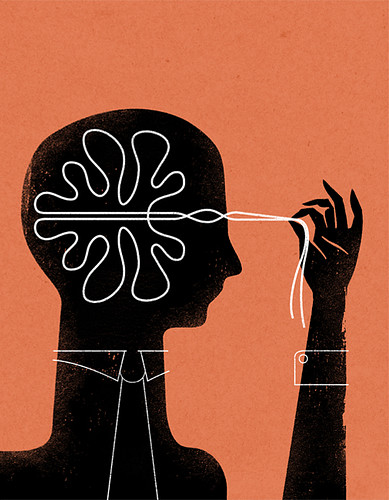 1. The Revolving Doors Between Market Norms and Social Norms. Market norms are strictly transactional exchanges: payments, wages, “prices, rents, interest, and costs-and-benefits” (68). Social norms are social exchanges: favors, gifts, promises, offers, and implicit exchanges made in close corridors among friends, family, and familiar individuals. Friction happens when both spheres get tangled. Say, for example, a national bank spends billions on advertising the impression of “social relationships” and offers dog treats and candy per visit; but then it regularly slaps its customers with outrageous late or overdraft fees. When market norms and social norms are mixed, customers become disillusioned and distrusting of the company. You can bet customers will take offense or switch banks. Conclusion: Companies should choose to associate with one or the other – not both – in how it manages its relationships with its employees, consumers, and the like.
2. Keeping Doors Open. People have an incessant need to keep their options open. Even if they have a “best option”, “medium option”, and “worst option”, people will waste opportunity and time to dabble between multiple options – only to regretfully see doors close on them. In the real world, there is a terrible cost to dabbling with options but not committing time, opportunity cost, and concentration on one option. For example, when parents obsessively involve their children in a range of activities like ballet, football, flute, Tae Kwon Do, swimming, and art, exhausting their children, wasting money, the worst part of it is, they lose time, money, and effort that could be spent mastering one particular gift, talent, or study that could make a difference in their children being superstars or staying average.
3. The Power of Price. People are so easily swayed by the cost of a product as positively correlating with its worth/value or effectiveness. In examining “the Placebo effect“, Ariely provides a wealth of studies that have proven that medical patients that received placebo operations and medicines experienced equal healing as did patients that received the actual operations. Implications are severe: There are countless costly medical procedures and exams that are unsupported by scientific evidence, and thus, could be done away with. Also, despite their controversy, placebo goods, drugs, and operations could be a cheap and yet successful method for curing serious illnesses or even improving test scores for the LSATs.
4. Ten Commandments, Honor Codes, and Honesty. Who would’ve thought that reading the Ten Commandments and being asked to rewrite them by memory would cause students to not cheat? Ariely provides startling implications on how reading a moral code, being primed with honest “terms”, or simply pledging truthfulness before taking an exam or speaking in a courtroom can lead to more honest behavior.
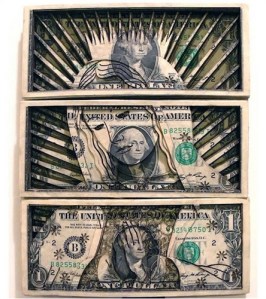
5. Handling Cash Makes Us More Honest. How profound! People are likely to cheat more for tokens and symbolic items of value (points, answers on an exam), simply because they are one step removed from money and can be easily rationalized. While most people won’t necessarily steal cash out of wallets or a few bucks planted in dorm community fridges, they will steal office pens and food, cheat on stock options, and get away with fraud – without touching a hint of green.
After this book, I have decided to take time to rethink my choices down to the food I order at a restaurant or the coupons I choose to clip. If our irrational behavior can be boiled down to systematic and predictable factors, it’s a shame for us to proceed through life not stopping ourselves from falling for the same ads, the wrong people, or poor, dishonest decisions that cost others or ourselves. Beat the system that is the subconscious human mind.
 Michelle J. | Blog