

A Musing on Solitude and Mentorship

Love and mentorshipIt’s kind of a mish-mash of topics but bear with me. I haven’t posted an earnest blog in a long time. But my coworker’s blog on jiu jitsu momentarily reignited my passion for blogging.  Three things I’d like to share regarding this month. First, my beau is out on the field training for the entire month. So essentially, that means no contact/ no seeing each other/ no hearing from one another for an entire month minus two days out of the month. At first, I thought I could handle it – as I am better prepared for it, it’s only been three days, and I’m more secure in our foundation compared to February 2014 (when we began dating). But now, my biggest struggle is not having that person with whom I entrust on a frequent basis my daily struggles, wins, and musings. We are super open with each other, and that void is slowly surfacing.

I now realize the importance of deep friendships. I have very few friends I pour my life into deeply and trust, and that are emotionally available; most of them are slow to respond and doggone busy – emotionally and professionally; so they keep things superficial. That’s where I have the problem. I sometimes slump into mild grief over how unknowing my friends are to my loneliness. Perhaps I have something to do with not letting them know how I feel right now. Especially now, at a critical juncture, when the person closest to me is gone, training and sleeping in the woods.

Which leads me to the second topic – mentorship. I realize why military wives and girlfriends plug into support groups tailored just for them. To find community, support, friendship, and sisters to weather the absence, isolation, and solitude women face when their men are away on deployments. So, I recently joined a women’s ministry group that is currently going through a study book on how to lead and mentor as a woman of God. I’ll admit, the setup is a bit rigid and forced; mentorship doesn’t flow in a forced framework. It often flows from a natural gravitation between one older person to/fro a younger, less seasoned person. I’ve been in work mentorships, where the match is, to say the least, forced. Mentorships for me worked out best when there’s a common thread, mythos, bond, or chemistry struck between two people. Or more importantly, it works best when an older woman is drawn very specifically to a particular someone and drives her to want to pour life, encouragement, and uplifting to her. I once had a spiritual mentor and counselor who saw herself in me – which is what made our connection and spark that much more salient. It didn’t feel like work for us to meet up to share very closely and intimately about our personal lives – for her, it’s her marriage and having kids post mid-thirties, for me, it’s been a slew of professional or romantic updates – one of which has stuck.

Last night, I seated myself close to a relatively young woman seemingly similar – a wife to a military guy with a kid or two, living in the area. I brought up our similarity and kindly introduced myself. She gently smiled at first. I asked her more questions about her husband’s situation, connecting to my personal experience. She shortly replied and stopped smiling and started to have an awkward gaze. I told her about my situation, my beau being out on the field and joked about how lonely I felt, and she forced a few laughs. There wasn’t much compassion on her part. Uncomfortable, I got up to get a decaf coffee and cake. I then stealthily moved to another table to avoid the awkwardness. Why are some women so awkward to friendly gestures and desire to connect?

For now, I have two dogs – one that is not mine – a list of errands, a movie I want to catch alone, and books to read.
I Invited a Stranger Into My Apartment

Tonight was the craziest night since I moved into my apartment. I invited a stranger into my apartment – to kill a 2-inch long millipede I spotted on the living room wall above the couch. Insane. While on the phone with June, I began hyperventilating and going through a series of suicidal cries and half-screaming complaints that consisted of “This is not happening to me – I’m going to die – I don’t know what to do tonight.” He suggested I knock on a neighbor’s door to get help – that serious. “If you let it go, it’s going to roam free forever and crawl alloveryou; you need to get help,” said he, an avid bug-lover like me.

So after some attempts to chase down the garbage collectors who pick up the neighborhood trash from 8-10PM, I decided my attempts to wander shamelessly for blocks wouldn’t get me any help. They moved too fast and were too far away to grab a hold of. I resorted to knocking on the door of my next-door neighbor who lived directly next to me (Apt A). Their lights were on. I knocked on the door, and a somewhat young-middle-aged man opened his door. Relatively medium-sized, the guy stood around 5’10” feet tall and donned a faded blue U of Texas Longhorns sports teeshirt. A definite sports fanatic with gentle blue eyes, red face, and a southern drawl. “Are you good at killing bugs?” I asked him, with my boyfriend on the phone for safety precautions. “Hmm,” he said with a look of defeat. He hesitated at responding but after I explained the situation in animated terms like “I think I might get a heart attack, honestly,” he agreed to help me out, probably from fear that I might pass out on at his doorway. After asking two questions, he brought over a broom and pan and got to work. He admitted he was afraid of bugs and planned to dust it and throw it outside.

Once inside, he politely removed his sneakers and walked over to the wall where the monstrosity sat like a fat sloth, not having moved a millimeter. It eventually scurried away from his broom. He tried to catch it onto the pan and threw the bug outside on the patio lawn. But to my dismay – this is where it gets icky – another part of the millipede had fallen from the wall. The neighbor pulled the couch away from the wall and began trying to broom the damned thing. I was giving the play-by-play the whole time on the phone and simultaneously in conversation with the man (“Richard”) who eventually resigned to the conclusion that the millipede crawled inside the vent. “You mean to say that it’s still alive?” “Yeah.” Basically, a part of the millipede had detached from the organism itself – and that’s the part the man through outside with his broom pan. The other half? “It returned to where it came from.” *Shivers*

He kindly suggested I call the insect control maintenance and have them spray a repellant against the edge of the wall and the air vent and also pointed all possible areas of entry. I was unbelievably thankful, and unbelievably freaked out beyond words. I bid him adieu. And that was my insane night fighting off a millipede with the help of a complete stranger.

Ex Machina: Bluebeard and Attraction

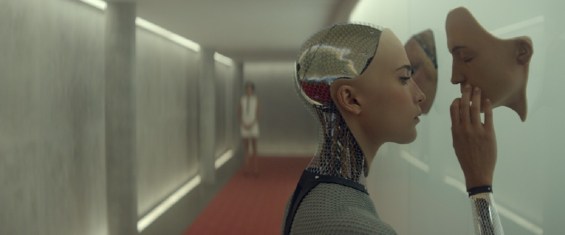
hero_ExMachina-2015-1This Saturday, I finally got to see “Ex Machina” with my boyfriend. It’s something we’ve been planning for three weeks – that special. The film is somewhat of a medium-budget Indie film by the director of “28 Weeks.” The film deals with a lot of interesting concepts – AI, human-robot relationships, deception, attraction, the drive for survival, and people’s moral compasses. I was first intrigued by the film because it had to do with a human tapping into the unknown – a fembot who responds physically and emotionally to the male protagonist. I thought it to be a provocative concept.

In the film, a young coder in his mid-twenties, named Caleb, wins a chance to stay a week at a secluded state-of-the-art home inhabited by Nathan, his company CEO, a genius who programmed the top-used search engine, Bluebook (similar to Google). During his stay there, things suddenly turn from thrilling to awry in a matter of minutes, as he realizes he’s trapped in a Turing test that he has to sign an NDA for, and finds himself locked into a modern home of weird trap doors made of frosted glass, pockets of man-made nature, and the founder himself; Nathan, amoral, constantly inebriated, but brilliant, has created an artificially intelligent fembot prototype, which is his prized creation, and he puts Caleb through the test of validating her existence. The latter part is where feelings get involved, and decisions become murky.

Caleb reluctantly agrees to participate in a series of interactions with Ava, who’s programmed with a soft face, curves, and an inquisitive personality, as a part of the Turing test; he tests just how “human” she’s been programmed to be. How convincing she is human becomes the ultimate tension in the film. Caleb, over time, develops feelings for Ava, who displays clear attraction and a desire to be with him – after the “test.” Caleb slowly falls for her, despite their interactions being limited to being behind glass walls – the tension that builds is artfully done. Towards the end of the film, Caleb becomes a puppet between the two characters – Ava and Nathan. He slowly unravels, as he’s not sure who to believe is telling the truth. Nathan, the maniacal CEO who’s obsessed with building the perfect AI artifact, or Ava, a fembot who wants nothing but to be with Caleb and repeatedly expresses undying devotion to the concept of being with him in the free world.

I came to two startling reactions from the film. How much the film parallels to Bluebeard, the French fairytale about a maiden who is wedded to a powerful aristocrat and later discovers his grisly secret – a room filled with his dead wives, whom he’s killed off because of their untrusting nature. [Spoiler Alert: You see a glimpse of this in Nathan’s bushy black beard, his company named Bluebook, and unanimously so, his bedroom filled with closed hanging closets that are filled with the deathly hanging bodies of earlier versions of the AI prototype he’s created.]

In addition, I thought it was interesting how the film dabbles with ‘attraction’ that builds between man and a robot. Despite there not being any sort of true sexual orientation and biology (hormones, estrogen, testosterone) that comes into play when attraction develops, what occurs between Ava and Caleb starts as pure conversation through openness and intimacy with each other. Openness because Ava asks Caleb to be open, and intimacy, because Ava, like Alice peering in to the Looking Glass, is programmed to read Caleb accurately and intrinsically due to her state-of-the-art capabilities. This forces them to confront feelings, emotions, desires, and anything awkward in the spaces between. What started as “Hi, tell me about yourself” becomes a sharing of childhood trauma to compliments about physical appearance to eventually plans for escaping together as a couple. Similar to the film “Her”, which awkwardly was one of my first movie dates with my boyfriend last year, “Ex Machina” deals with a man falling in love with a machine that at least sounds like a female. To that, I asked June what he thought of Caleb and his attraction for Ava, and he agreed that it’s plausible, and that feelings can grow based on conversation interactions between the two, which grew in familiarity, depth, and intimacy. My intrigue with this cross-platform love comes from our relationship; it started from a one-time attraction and encounter, followed by a month of personal stories, feelings, beliefs, memories, dreams, philosophies, and desires shared daily over the phone across state lines, which wove together the fabric of our lives, before we met again for the second time.

New Beginnings and Transitions

neworleans,photo,door,blue,inspiration,neworleansinspiration-202029ec91fbc683bb7db3eea558ed97_hWhere do I begin? March (as well as the tail-end of February) has been a crazy month for me. I quit a job after 1.5 years. I immediately began a new job (a contractor role) for a tech team at a large firm that specializes in government sector consulting; big irony for me (my beau comes from the DoD world). I am surrounded by a completely new team as well – three male tech geeks! I also just moved out and into an apartment – with my sister. I’ve already unpacked, tidied up, and began the chore of bill paying, decorating, furnishing, cleaning, and even cooking – all in less than a week. My life has been in beautiful chaos. Or better yet, stunning transition from one smaller door I closed to a new a wider door I un-reluctantly opened. I’m now excited to see where life takes me, in this journey of professional and personal growth from a fledgling to a seasoned independent woman. “Lean In” by Sheryl Sandberg has been a source of inspiration on my slightly haphazard journey into the known. But basically I’m flying off a launchpad into an exciting new abyss.

The Reason I Was Late To Class…

Chipotle

Two Saturdays ago, an interesting thing happened. My faith in humanity was redeemed; I realized good people still exist. And I don’t mean good people that are “nice” to you to your face or theorize how to live righteously or friends who are “nice” to you because they have to be. I mean being kind in their private time, without seeking recognition/validation of any kind, loving the unlovable, and especially not gaining a cent back.

I was chowing down Chipotle on F Street, China Town during break, with my fellow Saturday course classmates as we always do, travelling in a dorky self-conscious pack amid tourists, natives, workers who work on Saturdays, and of course panhandlers. We sat down on our high seats and discussed the latest findings at work, the course itself, our wry professor, couple of the married guy classmates expecting babies on the way, you know the typical work/school/life jargon. We quickly began to wrap up our food to make it before break ends to begin an intensive workshop session. Being punctual was duly noted for this particular day.

I saw one of my classmates, Ron*, back in line for some reason. Confused, I thought, maybe he’s just hungry again? But wait why — the line was even double the length we had to endure 20 minutes ago? Shaking off the confusion, I gathered my laptop bag and purse and made it to the sidewalk outside where my “pack” was meeting. “Why is Ron in line again?” I inquired.

“He’s getting lunch for a homeless man.”

I was utterly taken aback. Ron? You mean, the Brazilian mobile product guy who always comes early to class, sits in the front, wears his hair spiky, a fitted polo or button up and jeans, and giant grin on his face? I couldn’t believe what I heard. The furthest thing I could imagine about Ron. Not to say that he doesn’t seem charitable. Don’t get me wrong – he’s as friendly and charming as they come. But charitable, to me, seemed like such an archaic, outdated, rare act to behold – I rarely see up-and-comers in their late 20s act in a way that doesn’t benefit them – without mentioning it to their colleagues.

Minutes ticked by and my peers started tapping their feet and checking their watches. I convinced everyone to wait for Ron.

After about seven minutes, Ron hurried out of Chipotle. Didn’t even bother to tell us what he was up to. Just had his book bag and a smile. “Let’s get to class guys!” We all convened and walked back up to Massachusetts together. “Class can’t start without us, since we’re like half of the class,” I said, eschewing people’s fears. I didn’t walk with concern for being late to class, however. I walked with pride. Knowing I had a fellow classmate who had the heart to love on someone who wouldn’t ever return the favor. He not only bought lunch, I heard; he stood in line chatting with the homeless man, probably in his early 60s, a scrunched up, wiry old man hunched over in a beanie, wearing a covering of sweaters. I walked with a guy who didn’t need recognition for his kind act – perhaps because he knew the glory is in Heaven.  I have the pleasure of dealing with Ron, and it doesn’t come as a surprise that he is a good person. It transcends into his work ethic, investment in our team projects, and being a solid leader and communicator. I know he’ll be a great leader someday.

Perhaps success isn’t always measured by what you know, say, or do vocationally. Success to me is based on the heart that drives the person.

And the True Winner Is…

Rush and Lauda

Can the Real Lauda and Hunt please stand up?

Who can define what true winning is? The idea of winning is one that has faced intense scrutiny and reached near immortalization. In a competitive landscape where people pour their entire life savings into attaining flashier medals, upgrades in lifestyle, higher degrees, loftier titles, bigger paychecks, it’s no joke that winning is oftentimes the most touted and sought after end goal for many.

On Thursday, I caught the 8:15 showing of Rush (2013), a biographical movie I had no prior knowledge of. I hadn’t even seen the trailer, just ran a simple search and came across an ambiguous movie snapshot emblazoned with the smoldering stare of Chris Hemsworth. I wrote it off as a race-car action movie with some jaw-dropping daredevil stunts. Little did I know that this film would provide a meaningful glimpse into what true winning looks like.

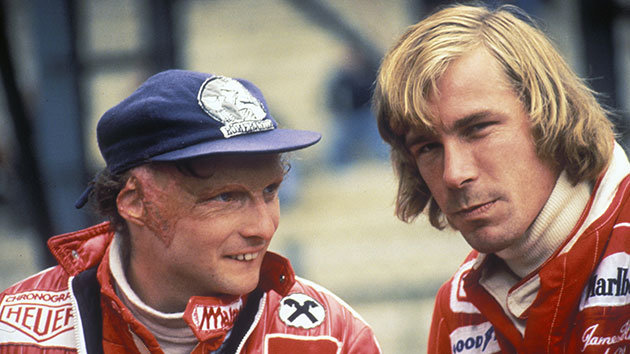
The film is incredible in its authenticity. The direction Ron Howard went with in capturing the glamourous, boozy, superficial 1970s is enlightening. The actors are brilliant. The film captures the rivalry of two polar opposites in the game of Formula One race car driving. James Hunt, a famed playboy known for his looks, charm, and reckless lifestyle on the track and off, and Niki Lauda, a serious introvert who is precise as he is calculated about the art of racing, go tête-à-tête in their thirst to win as many Formula One races across the globe.

What struck me as brilliant is the fact that neither racer is the antagonist nor protagonist. It give a fair view of two attitudes, sets of values, and philosophies at winning – at first glance. The film is told through the perspective of both male leads. Neither is completely hate-worthy nor winsome, although I think this could be challenged by the end of the film who is really likable. Hunt, at first, appears the more charismatic male lead, being an uproariously confident chick magnet and famed man-whore in his day. Strolling onto the track after nights of being completely wasted, hung over, and high, his reputation precedes him. “I’m a winner,” he tells himself as he drives fast and reckless, without doing his homework and mentally preparing himself. Cocky is an understatement. Over time, his cavalier attitude and reckless lifestyle corrode his performance and his strained marriage with supermodel Suzy Miller. But obviously, he gets to enjoy flashy endorsement deals, louder crowds, and leggy fans screaming his name. Winner, right?

Not so fast. Niki Lauda may appear to be the sore loser on the social spectrum – as Hunt berates him with insults on and off the track about how ugly he is and how nobody likes him. “If only people liked you,” Hunt tells Lauda, in bitterness after Lauda wins multiple races. Regardless, it is Lauda’s approach at racing which garners respect from his peers and from the audience. While Hunt is out enjoying perks of being a Formula One superstar, Lauda is in the garage with his dedicated team of underpaid engineers, improving the physics of his car, practicing countless laps around the track with his team, stringently negotiating endorsement deals with Ferrari, mastering the technique of maneuvering his car, and being mentally prepared for each day on the racetrack.

*SLIGHT SPOILER ALERT AHEAD*: The part of the film that I believe was the “ah-hah moment” that contrasted the two male leads forever and literally shifted their positioning in Formula One racing – and life itself- occurred in a surreal, gut-wrenchingly poignant scene. The two racers are going head to head at a rain-soaked Japanese Grand Prix, a perilous, controversial track that has led many to their deaths. Lauda, shaking off some life-altering injuries prior to this GP event, decidedly appears on the track, ready to beat Hunt one more time. During the GP, Lauda suddenly makes a pit-stop. Instead of making a stop to switch out his tires, he just gets up, pulls off his helmet, and unpredictably pulls out of the track, disqualifying himself from the race. Reporters are going ballistic about this decision. People are utterly confused.

His deciding factor to quit this race and lose is due to thoughts of his wife, while he’s racing on the wet track. Knowing the pain he had put her through in his previous injury and not wanting to lose the only thing he had in his life, he decides to forfeit the opportunity to put Hunt in his place. Because deep inside, he doesn’t want to jeopardize his life again, or hurt the people in his life; besides, he knows he’s already won. And he’s happy, living a grounded life with a good woman. As expected, Hunt qualifies in the top 3, winning enough points to make him the winner in the Formula One race. But as the raucous sounds of celebration drown out in the distance, it’s clear who won. While Hunt is popping champagne bottles and enjoying his win with a bevy of women at his side, Lauda is being lifted off the ground in his helicopter with his wife, relieved about his decision to pull out of the GP. “I don’t regret anything,” he says as he stares at his wife.

Sometimes, winning isn’t about attaining more and more things that don’t last. It’s about holding onto the few things that do last and stand the tests of time.

The Truth about Carpe Diem: Why Regret Is Necessary

Regret

Do everything, regret nothing.” — Unknown

There are thousands of movies, memes, and quotes that revolve around the theme of regret – about avoiding regret by embracing everything you’ve done in your past; or regretting the things you didn’t do. Films that follow protagonists that go back in time to relive a life that was otherwise bypassed, or stories about antiheroes that came to terms with their mistakes – mistakes that caused great havoc in their lives or in the greater realm of society.

I had the pleasure of getting sucked into a long-winded conversation with my coworker. Gregarious, warm, and effusive, this guy doesn’t stop when it comes to complimenting.

Today, he shared his past with me. When he was 19, he started his model/runway production company in Florence, Italy, which took him deep into the seedy underbelly of sex, models, drugs, and chaos within the dog-eat-dog world of the fashion industry. But after two decades, he decided to throw the towel in and sell his company. Like a prodigal son, he returned to his family and took a year to soul-search and pick up water skiing. Through the course of events that followed, he met and married his wife, had a child, and transitioned over to where I work now.

What I was most struck by was James’s attitude towards regret. He had none. Even though he danced and flirted with an exhaustive list of leggy models, cutthroat people in the industry, the excess of superficiality, his experience of the world remained blasé and blissfully ignorant to its ugliness. To me, being the “prodigal son” coming home to search for truth, family, meaning, and what mattered most, he should have looked back in dismay at what he had run from.

He then encouraged me to go out in the world and experience as many things as possible, meet as many people as possible, expand my horizons, and open my mind before I get married. “You’ll regret it if you don’t,” he advised me. “Most people who hit their mid-life crisis and haven’t experienced everything end up regretting it. I have no regrets.”

Travel

My takeaway, however, was different. While I was challenged to take him up on the offer of travelling to destinations I’ve never been – cool spots in California, Boston, Asia, more parts of Europe – trying the finer culinary treasures of the world, meeting extraordinary people of all walks of life, expanding my cultural appetite, and even taking up new hobbies and getting involved in activities outside of greater DC, I couldn’t help but struggle with the idea of “trying everything” and not being left with an immutable jadedness. Losing your innocence, in a sense. With every experience comes a little bit of losing your naivete to a world prior. Repeated exposure to stimuli dulls and desensitizes. Some experiences can lead to suffering the pangs of painful encounters or turning over leaves better left turned over.

I couldn’t buy the fact that he never experienced regret. I get his modern philosophy about embracing his past; our culture is rampant with self-acceptance and channeling all our mistakes into making better, more complete selves. His past makes up who he is and allows him to appreciate his Greek wife, his precocious three-year-old toddler, and a home in the suburbs. But I believe that regret is not an act of hating or rejecting your past. It’s a brutal and honest evaluation of less than ideal actions you’ve taken up in the past – actions that caused hurt to others, yourself, your career, your life, relationships, etc. Regret doesn’t just come from what you haven’t done. But if you’re a self-evaluating human, you must accept, internalize, and learn from actions that were less than favorable. Take, for instance, the case of a drunk driver who crashes into an 80-year-old-woman crossing the street – shattering her left hip entirely, causing her a hip replacement and thousands of dollars lost on physical therapy. It would be unreasonably calloused to look back on that experience without insurmountable regret – probably enough to cripple a man from ever driving again. Maybe he could have had two drinks instead of 15? Maybe he could have handed his keys over to his sober friend to drive him home?

Regret is a healthy form of self-evaluation. It prompts wisdom and discernment; and it is shrewd preparation for your future actions. It teaches you what mistakes not to make or repeat over again. It provides disclosure into the implications of your actions, and how they can gravely hurt chances, opportunities, people, and even yourself. Or it can help you become better – a better family member, friend, lover, coworker, manager, etc.