Can the Real Lauda and Hunt please stand up?
Who can define what true winning is? The idea of winning is one that has faced intense scrutiny and reached near immortalization. In a competitive landscape where people pour their entire life savings into attaining flashier medals, upgrades in lifestyle, higher degrees, loftier titles, bigger paychecks, it’s no joke that winning is oftentimes the most touted and sought after end goal for many.
On Thursday, I caught the 8:15 showing of Rush (2013), a biographical movie I had no prior knowledge of. I hadn’t even seen the trailer, just ran a simple search and came across an ambiguous movie snapshot emblazoned with the smoldering stare of Chris Hemsworth. I wrote it off as a race-car action movie with some jaw-dropping daredevil stunts. Little did I know that this film would provide a meaningful glimpse into what true winning looks like.
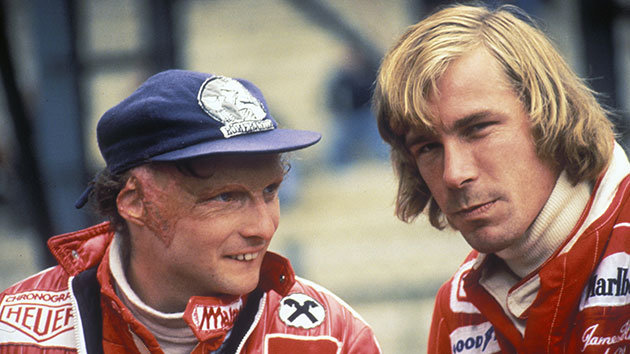
The film is incredible in its authenticity. The direction Ron Howard went with in capturing the glamourous, boozy, superficial 1970s is enlightening. The actors are brilliant. The film captures the rivalry of two polar opposites in the game of Formula One race car driving. James Hunt, a famed playboy known for his looks, charm, and reckless lifestyle on the track and off, and Niki Lauda, a serious introvert who is precise as he is calculated about the art of racing, go tête-à-tête in their thirst to win as many Formula One races across the globe.
What struck me as brilliant is the fact that neither racer is the antagonist nor protagonist. It give a fair view of two attitudes, sets of values, and philosophies at winning – at first glance. The film is told through the perspective of both male leads. Neither is completely hate-worthy nor winsome, although I think this could be challenged by the end of the film who is really likable. Hunt, at first, appears the more charismatic male lead, being an uproariously confident chick magnet and famed man-whore in his day. Strolling onto the track after nights of being completely wasted, hung over, and high, his reputation precedes him. “I’m a winner,” he tells himself as he drives fast and reckless, without doing his homework and mentally preparing himself. Cocky is an understatement. Over time, his cavalier attitude and reckless lifestyle corrode his performance and his strained marriage with supermodel Suzy Miller. But obviously, he gets to enjoy flashy endorsement deals, louder crowds, and leggy fans screaming his name. Winner, right?
Not so fast. Niki Lauda may appear to be the sore loser on the social spectrum – as Hunt berates him with insults on and off the track about how ugly he is and how nobody likes him. “If only people liked you,” Hunt tells Lauda, in bitterness after Lauda wins multiple races. Regardless, it is Lauda’s approach at racing which garners respect from his peers and from the audience. While Hunt is out enjoying perks of being a Formula One superstar, Lauda is in the garage with his dedicated team of underpaid engineers, improving the physics of his car, practicing countless laps around the track with his team, stringently negotiating endorsement deals with Ferrari, mastering the technique of maneuvering his car, and being mentally prepared for each day on the racetrack.
*SLIGHT SPOILER ALERT AHEAD*: The part of the film that I believe was the “ah-hah moment” that contrasted the two male leads forever and literally shifted their positioning in Formula One racing – and life itself- occurred in a surreal, gut-wrenchingly poignant scene. The two racers are going head to head at a rain-soaked Japanese Grand Prix, a perilous, controversial track that has led many to their deaths. Lauda, shaking off some life-altering injuries prior to this GP event, decidedly appears on the track, ready to beat Hunt one more time. During the GP, Lauda suddenly makes a pit-stop. Instead of making a stop to switch out his tires, he just gets up, pulls off his helmet, and unpredictably pulls out of the track, disqualifying himself from the race. Reporters are going ballistic about this decision. People are utterly confused.
His deciding factor to quit this race and lose is due to thoughts of his wife, while he’s racing on the wet track. Knowing the pain he had put her through in his previous injury and not wanting to lose the only thing he had in his life, he decides to forfeit the opportunity to put Hunt in his place. Because deep inside, he doesn’t want to jeopardize his life again, or hurt the people in his life; besides, he knows he’s already won. And he’s happy, living a grounded life with a good woman. As expected, Hunt qualifies in the top 3, winning enough points to make him the winner in the Formula One race. But as the raucous sounds of celebration drown out in the distance, it’s clear who won. While Hunt is popping champagne bottles and enjoying his win with a bevy of women at his side, Lauda is being lifted off the ground in his helicopter with his wife, relieved about his decision to pull out of the GP. “I don’t regret anything,” he says as he stares at his wife.
Sometimes, winning isn’t about attaining more and more things that don’t last. It’s about holding onto the few things that do last and stand the tests of time.
 Michelle J. | Blog